
An expert from the ICMR's National Institute of Virology addresses concerns about hantavirus cases detected on a cruise ship, stating there is no immediate public health threat to India and that the cases appear isolated.
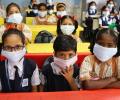
The H3N2, which has been in wide circulation for the past two-three months, causes more hospitalisations than other subtypes, said ICMR scientists who keep a close watch on ailments caused by respiratory viruses through the Virus Research and Diagnostic Laboratories network.
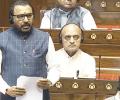
India has reported 59 cases of Human Metapneumovirus (HMPV) and two deaths due to co-morbidities between January 6 and 29, according to Union Minister Prataprao Jadhav. The virus primarily affects young children, the elderly, and immunocompromised individuals, leading to respiratory illnesses. The government has taken measures to monitor and control the spread of HMPV cases and create public awareness.

Till date eight cases of the disease have been detected in India, out of which five have foreign travel history, the minister of health and family welfare said.
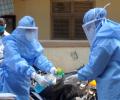
Rs 7,774 crore, has been provisioned for COVID-19 Emergency Response and the rest for medium-term support, ranging from one to four years to be provided under mission-mode approach.

According to various global media reports, China is creating Covid-like pathogens in Pakistan that have the potential of causing virus contamination on a scale far higher than Covid.

The ICMR said people having symptoms like fever, cough, sore throat and runny nose and residing in hotspots or cluster areas and in evacuee centres will now be tested for coronavirus infection.

A 22-year-old man, who recently returned to Kerala from the UAE, allegedly died due to monkeypox on Saturday.

Joint Secretary in the Health Ministry Lav Agarwal claimed that India has been doing better than many other countries on the outcome ratio, which is the number of recoveries from coronavirus infection versus the number of deaths.

'Let me talk about young Indian startups with their hearts in the right place and how they are proving that innovations that represent 'affordable excellence' -- breaking the myth that 'affordability' and 'excellence' cannot go together -- is indeed possible!' says Dr R A Mashelkar, the eminent scientist, in this fascinating feature.
 © 2026 Rediff.com - Advertise with us - Disclaimer - Privacy Policy - Sitemap - Feedback - About us - Terms of use - Grievances